Matthew Loftus | Resisting Therapy Culture | Steve Brown, Etc.
Ministries > Steve Brown, Etc. with Steve Brown
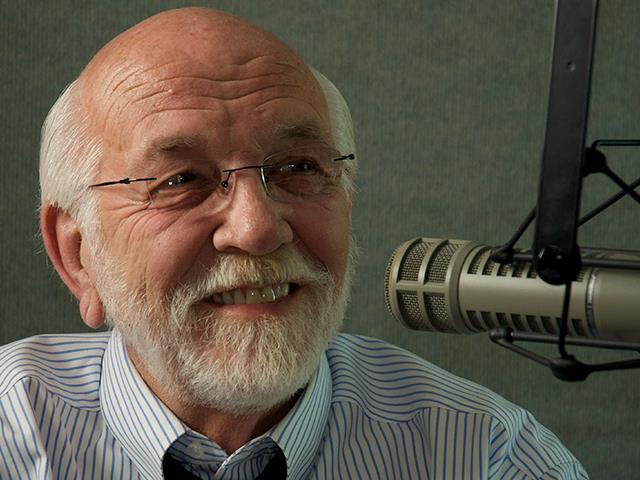
Triggered, gaslighting, narcissist... Has therapy culture invaded the church? If so, what do we do about it? This week, the gang speaks with author and doctor Matthew Loftus who contrasts the benefits of therapy with the risks of the church co-opting therapy culture.
The post Matthew Loftus | Resisting Therapy Culture | Steve Brown, Etc. appeared first on Key Life.
Matthew Porter: Yes, sir, that is the name of the show, Steve Brown, Etc. My name is Matthew Porter. I'm your humble guest host today. Dr. Brown will return next week. Have no fear. We've got this under control. Perhaps more so. I'm saying that more for myself. There you go. Our producer Jeremy is in the little glass booth. Jeremy's a musician as you know. Do you know his favorite key?
Jeremy: I don't know. What is my favorite key? Good segue, good lead-in. I think it's the key of C because it doesn't have any of those confusing little flat or sharp thingies. That's a quote. That's an actual quote. My degree in music composition taught me those little flat or sharp things. Stick to C. F if it's absolute. No, not even that. Not even one. If you're going to change the key, do G. Yeah, yeah.
Matthew Porter: Our one-man IT department, John Myers, is in the tech bunker. John says old IT guys don't die, they just migrate to the cloud. I got to be honest, I'm not feeling really proud at this exact moment. A minus. Yeah, I was just going to say B flat. This is your work and you weren't looking real happy about it. All right, we've got a couple more swings to pull it out of this nosedive. Dr. George Bingham is the president of Key Life. George occasionally likes watching Canadian football. Of course, their touchdowns aren't six points, they're 3.72 points. Metric system at the current rate. Kathy Wyatt is the soft inner side of the program. As of this recording, this is historic, the Atlantic has produced zero hurricanes this season. The first time in 112 years and I can't fully explain exactly why. I think it's because of Kathy. I have this feeling that she reached out to El Niño with the old per my last email trick and bam, got rid of them. That's it. You are a high-pressure system. There you go. Doesn't work well sometimes, does it? Guys, we have a great guest for you today. When you hear the topic we're going to get into, you're going to think, "Oh, oh, yeah, I'm glad you guys are talking about that. And why haven't I heard other people talking about it?" Our guest is Matthew Loftus. He teaches and practices family medicine at a mission hospital in Kenya. His work has appeared in the New York Times, The Atlantic, Christianity Today, First Things, Comment, and Mere Orthodoxy. That's range, kids. That's range. That's like every Christian periodical out there plus The Atlantic, which is not. Except maybe the Mormon Review or whatever. Minus the Deseret. I'm sure he's working on that. Matthew's new book is called Resisting Therapy Culture: The Dangers of Pop Psychology and How the Church Can Respond. Matthew, thank you for joining us.
Matthew Loftus: Thanks for having me here today.
Matthew Porter: We don't get enough Matthews on this program. Game recognizes game, so glad you're here. Matthew, you have a fascinating story and I want to get into that, but just before that, I kind of want to set the rails because I feel like internet people are watching and they're already sharpening up their knives to say, "Oh, I know what this guy's about." You don't. You don't. So that's why we're going to start. Not this and not this, but this. You open the book by saying therapy culture is out of control and making people sicker. So to start, help us separate therapy from therapy culture.
Matthew Loftus: Therapy culture is medicalizing normal human experience. It's taking your regular grief and calling it a symptom of depression. It's taking your everyday worry and calling it a symptom of anxiety. It's making every possible bad thing that happens to you some kind of trauma and then judging institutions by that standard of wanting people to not do anything that might possibly harm someone's mental health. Through that process, people lose their agency, their ability to make decisions for themselves, to make good choices for themselves. Therapy, on the other hand, is a practice. It's a thing that people study, that they learn how to do. It can save people's lives and it's absolutely a good thing. So that's the distinction we've got to work with. Therapy is good, therapy culture is bad.
Matthew Porter: This might be a good time to set the table as far as your experiences, where you've been, what you've seen. The book comes from a deeply personal place, is that right?
Matthew Loftus: Psychiatry and therapy, mental health, is both a personal and professional passion of mine. I'm a family doctor, but obviously within family medicine, we deal with behavioral and psychological issues all the time. I did some mental health practice working with addiction when I was in America working in Baltimore City. Since moving to East Africa, I helped to start a psychiatric clinic at a rural mission hospital where we were seeing people that had no other access to mental health treatment. I love prescribing psychiatric medications, referring people for counseling and therapy, and I love being able to do that kind of work because it really does change people's lives. Personally, I've also struggled with depression over the years and battled pornography addiction and seen counselors, seen therapists, and taken antidepressants. This book comes out of those experiences as well.
Matthew Porter: It's funny, I rattled off a list of terms and there's scads more, but gaslighting, toxic, boundaries. It feels like these are words that have a place, have a meaning, have a context, but we've gotten the mall food court version of it and then people are just, it's like Chinese food. It's not Chinese food. It's an echo. It might as well be a completely different thing. Not only are people in the congregation using these words, it gets woven into the culture of the church and now people are expecting the church to handle things that they were not supposed to. It sounds like there's a multi-headed hydra of issues at play here.
Matthew Loftus: When people are using these words, some of them do have a very specific clinical context and a meaning that's more scientifically established, narcissist being one of those. There's others that sound clinical-ish, but they have a context within that therapist-client relationship, that doctor-patient relationship, like boundaries. When they get taken out of that context and just used without any regard for the meaning, then you just get this process of linguistic inflation where all of a sudden everything becomes more important, sounds more like health science. I think what happens a lot is that people have difficulties, they have pain, they have conflict in their relationships, and they want to make those things real. They use clinical-sounding language so that it feels more real to them, but that's not what that language is for.
Matthew Porter: There's a Shakespeare quote, "Every cloud engenders not a storm." It's like, hey, sometimes life just sucks. It's not the iceberg cap to anything, it's just, yeah, this is bad. That matters, but there's some dangers as we'll get into about catastrophizing every single thing. I'm curious in the context of East Africa if the experience of mental health and therapy in America contrasts with what you see there because it's such a different experience. I would feel like it would still bear out that this really is an issue, this is not just neurotic privileged people in the West. There is an issue at work, but I imagine it looks very different. Is that accurate or not so much?
Matthew Loftus: In my context, we still have people dealing with immense stigma, kind of what it was like in America 60-70 years ago. But also, particularly among young people, educated people who are getting this stuff from social media, I've definitely started to see some of these therapy culture things creep in. Even one of my Kenyan colleagues said something like when you bring in mental health, all of a sudden it's sacred and you can't challenge that person anymore.
Matthew Porter: There's a lot we're setting the table with and there's still so much more to go. This is something very important because mental health is important, but also it's important to know who's supposed to do what. What is the church supposed to do? What is the church not in the business of doing? On the other side of the break, we'll take a look at this. Have we approached therapy broadly in a wrong way? Have we been looking at it as something that maybe it's not, hoping it would provide answers that it never was designed to? We'll get into that on the other side of the break with Matthew Loftus. He's a doctor and an author and he's talking to us about his new book, Resisting Therapy Culture. Hang out guys, we'll be right back. Don't go anywhere. Thanks for joining us on Steve Brown, Etc. We are talking to Dr. and author Matthew Loftus. His new book is called Resisting Therapy Culture: The Dangers of Pop Psychology and How the Church Can Respond. Before the break, I teased one thing that I had come across in some of your, not in the book specifically, but you had cited an interesting quote and I want to read just part of it talking about having an accurate read on what therapy is and is not and what it can do and what it can't. This is you quoting somebody else. "The real message to the public should have been something like, 'We are an immature science. Our treatments are imperfect and flawed. They help some people some of the time, and we don't quite know who will benefit or how much. They come with risks, at times serious risks, and no one can know in advance how they'll affect you.'" There's more to it, but I thought that was a perspective that I haven't really heard. Can you expand on that and why that resonated with you?
Matthew Loftus: That's Awaise Aftab. He's a psychiatrist and he has a lot of really thoughtful, philosophical takes on psychiatry. I think a lot of the challenge that comes with psychiatry and therapy is that they are clinical practices and we use, especially nowadays, a lot of medications to try to help people, but there's still so, so, so much we don't know about what mental illness is. We don't know how it happens in the brain, how it interacts with stressful events. We obviously know some things and we know that some things are very, very helpful to people and others only help them partially. I think part of the challenge is that in the last couple of decades, psychiatry and therapy, wanting to establish themselves as authorities, may have oversold some of their capacity. Now you have a backlash against that. Things like talking about serotonin and depression to say, "Oh, your mental illness is just a chemical imbalance. It's like diabetes or high blood pressure." That is a dramatic oversimplification that may have been helpful for some people in processing and understanding and overcoming stigma, but it misses a lot of other realities about how mental illness works. We have to be humble about what we know and don't know.
Matthew Porter: Be realistic about what we may or may not get from trying therapy, which is not to say it's not something to explore. Jeremy.
Jeremy: I really do appreciate this whole conversation and that last thing you said actually ties into what I wanted to get into. I am someone who's in therapy right now and I am fairly active on social media. I have a lot of friends who are self-diagnosed neurodivergents and everybody suffers from anxiety, everybody's got a trauma story, and everybody who ticks me off is a narcissist. The thing that you had said at the end of the first break is first of all, I'm going to put words in your mouth and you can correct me and then I'd like you to answer for them. That when someone self-identifies as one of those things, then you can't challenge them. So my question is, I've got lots of friends like that and what do I do in those scenarios? What do I do for myself when I find I'm tempted to be like, "Oh, well, I definitely have OCD and ADHD"? Says who? That's what my therapist says. He's like, "Do you really? No." So what do you think?
Matthew Loftus: Well, it's a lot easier to tell you what to do because you're curious and you're asking and you want to get better. I think what your therapist does is actually a really good strategy to say, "Okay, on what basis?" And then I think the follow-up question to that is what difference does it make? These diagnoses are like you're telling yourself a story. If that story is, "I can take this medication that helps me have more control in my life and do the things that I want to do, that I need to do, that God has for me. These medications or these therapy practices help me to take the steps I need to get better, they let me rise to the challenge of life," then that's a really great story and that's a story that helps a lot of people. But if the story is, "I have this diagnosis and because of that, I can't do that and I shouldn't push myself any harder. I should just shrink back and stay where I'm not being challenged, I'm not challenging myself, I'm not moving beyond these symptoms and overcoming these symptoms," then that's a really dangerous and sad story. That's a story that's making you sicker.
Matthew Porter: You talk about that in the book, how patienthood almost becomes your identity and your symptoms suddenly follow your diagnosis. Like, "Hey, this might be a thing," and then all of a sudden symptoms array around that. In certain instances, a diagnosis or something is not the most healthy thing in the world. Kathy, you have a question? Maybe tee it up and we can answer it on the other side of the break.
Kathy Wyatt: Because it seems that especially within the church, we're talking about believers here, but it seems like when people are sharing with each other and they say, "Well, I think you need to go talk to somebody." Hopefully they're more diplomatic than just saying, "You need a counselor," or, "You need a shrink," or whatever. But it would be helpful if you go and talk with somebody. It's become an understood thing within the church that if this, this, and this don't work, then we just automatically send them to a counselor. So my question is, is there first of all, I think I know you're going to say that that's not a good thing. But the other thing is, is there actually, I think you mentioned that there was a study that said that sometimes, anyway, the question is, are there such people that really don't need to go to therapy?
Matthew Porter: That's a great question. I certainly hope so. We'll talk about that on the other side of the break. Who needs to go, who doesn't need to go? Another thing, there's a whole group of people even in the church who are anti-therapy full stop, categorically. Where does that come from? What do we do with that? We'll talk about it on the other side of the break.
Related Episodes
Angie Smith | Into The Deep | Steve Brown, Etc.
Sunday, October 11
Ian Simkins | Every Table An Altar | Steve Brown, Etc.
Sunday, September 27
Steve Brown | God’s Not Mad At You | Steve Brown, Etc.
Sunday, September 20
About Steve Brown, Etc.
A weekly talk show featuring Steve and “the rest.”Key Life exists to communicate that the deepest message of the ministry of Jesus and the Bible is the radical grace of God to sinners and sufferers.
Because life is hard for everyone, grace is for all of us. And grace means that because of what Jesus has done, when you run to him, God’s not mad at you.
All of the radio shows, sermons, books, and videos we produce work together toward one mission: to get you and those you love Home with radical freedom, infectious joy and surprising faithfulness to Christ as your crowning achievement.
Learn more: http://www.keylife.org
About Steve Brown
He’s not your mother and he’s not your guru. He’s Steve Brown - a speaker, author, former pastor and seminary professor, and founder of Key Life Network, Inc.At Key Life, Steve serves as Bible teacher on the radio program Key Life and the host of the talk show Steve Brown, Etc. Prior to Key Life, Steve served as a pastor for more than thirty years and continues speaking extensively.
Steve has also authored numerous books, including How to Talk So People Will Listen, Three Free Sins, Hidden Agendas and his latest release, Talk the Walk: How to Be Right Without Being Insufferable (now available as an audiobook).
Contact Steve Brown, Etc. with Steve Brown
Key Life Network
P.O. Box 5000
Maitland, FL 32794
In Canada, send requests to:
Key Life Canada
P.O. Box 28060
Waterloo, Ontario N2L 6J8
1-800-KEY-LIFE (1-800-539-5433)


